Each quarter, I look into changes in the GDP, and how those numbers reflect what consumers are feeling in terms of employment, spending power, and interest rates. I also look into indicators of corporate health in the stock market. I also consider major news topics – namely, what is on the mind of many Americans. This quarter, I invited my grandson, Jack Bertelson, to co-author this report with me. Jack is a senior at Roswell High School and recently earned his FPQP® designation. Jack took on the research into gas and oil companies and wrote that section of this report.
What Do We Learn From the GDP?
Gross Domestic Product in the third quarter grew to 3.4%, up from 2.2% in the second quarter (which was a revised estimate above the original 1.5% reported). GDP increases typically signal three things: lower unemployment, more consumer spending, and a potential increase in interest rates. Let’s look at those three topics first:
Unemployment: Unemployment remains low – continuing to hover just over 4%, and wages have grown. However, if we look at private sector average hourly earnings growth compared to inflation as measured by CPI (Consumer Price Index), we see that from September 2024 to September 2025 wages grew 3.8% and CPI was 3.0%. Earnings growth exceeded CPI during that year. Between September 2025 and September 2026 wage growth slowed to 3.0% and CPI accelerated to 3.7% resulting in a 0.7% reduction in purchasing power. Therefore, workers are receiving larger paychecks but losing purchasing power.
Consumer Spending: Consumer spending is 69% of GDP. The personal savings rate fell from 4.5% in July to 3.8% in September further indicating a reduction in purchasing power. This does not mean that households are out of money. What it does mean is that if household income remains unchanged and inflation persists, growth in consumer purchasing is at risk and therefore economic growth overall is threatened. The combination of no real wage growth and a declining savings rate presents a threat to future GDP growth.
Interest Rates: Inflation continues to be above the Federal Reserve target of 2% with core PCE (Personal Consumption Expenditures) index coming in at 3.1% year over year. The Federal Reserve raised rates .25% at its September meeting and the interest rate futures markets are pricing in another .25% increase in December and two more increases in 2027. The Wall Street Journal’s October survey of 71 economists’ forecasts the Fed Funds rate to be higher than current levels until June of 2028. Rates will increase and remain higher than recent years until inflation approaches the target of 2%.
Corporate Earnings and Gas Prices
Corporate earnings remain strong with 60% of S&P reporting. Seventy percent exceeded revenue estimates, and all 11 sectors reported positive earnings growth. An important metric for stock valuation is the Forward P/E ratio, which is the ratio of the price per share to the expected earnings per share for the coming year. If the ratio is too high, the stock may be over-valued. Forward P/E for the S&P 500 is currently 18.7x, which is below the 5-year average and indicates that current equity prices are not overly inflated. As you are aware, technology has been a strong driver of earnings growth. However, in this quarter, for the 493 companies in the S&P excluding the Magnificent 7, earnings are estimated to be up 32.6% while the Mag 7 are up 22.6%. These are estimates because not all companies have reported and the final numbers may well be different. The point is, the growth in corporate earnings is broad-based.
As many Americans have noticed, gas prices have continued to skyrocket through this quarter – mainly attributed to the conflict in the middle east. The biggest oil companies in the U.S, Chevron and ExxonMobil, however, seem to be doing better than ever. Both companies produce most of their oil in North America, so their production costs have not changed much. What has changed is the price that buyers in countries whose oil is supplied from the middle east will pay.
The key to understanding why the gas prices in the US have increased so much lies within the amount of oil being exported by the US. This graph shows the amount of crude oil being exported by the United States over the past 13 years.
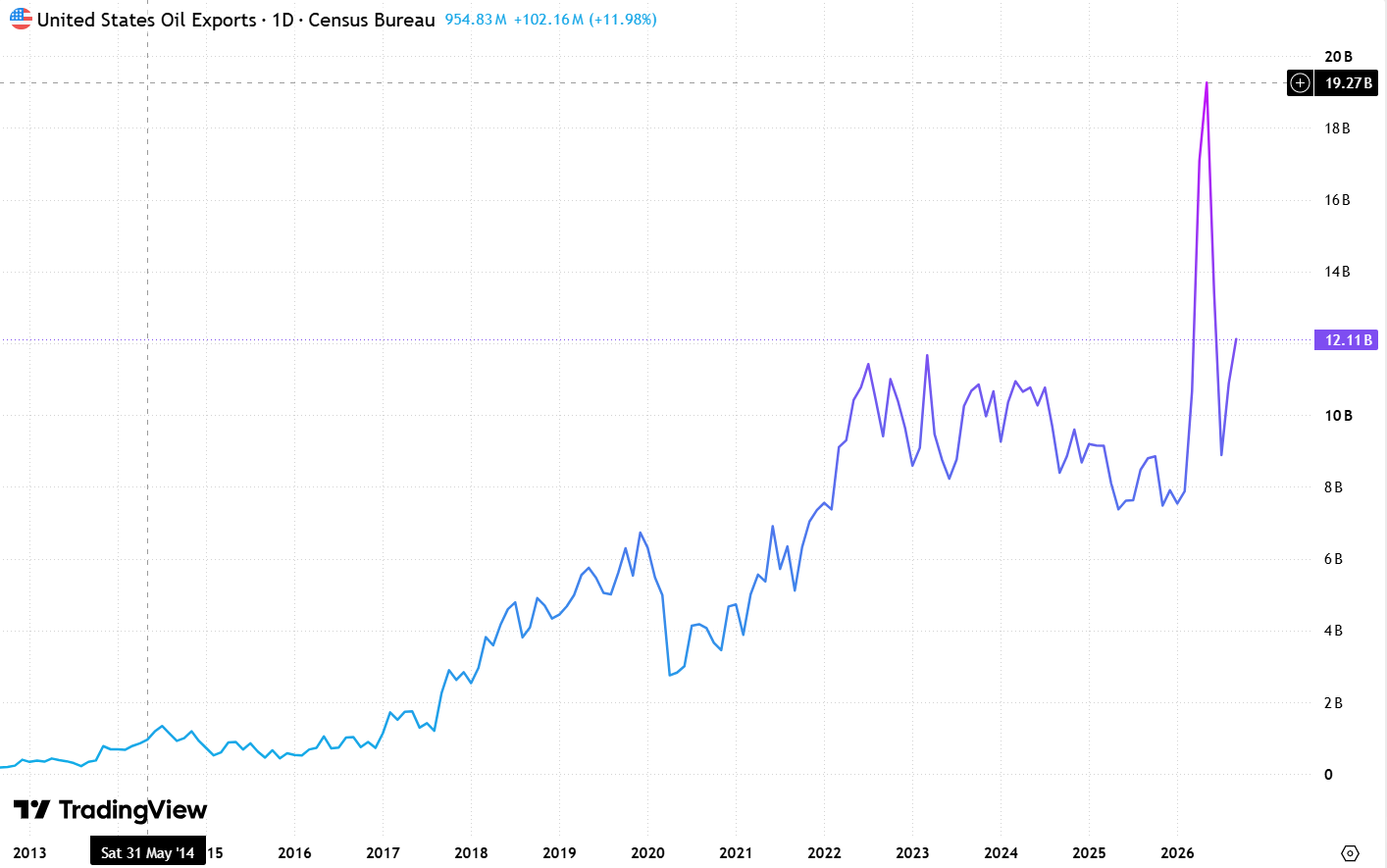
When foreign markets face increased shortages, consumers in those markets are willing to pay more. Because of this, the US companies will choose to sell to the consumers willing to pay the most. This is called the highest-bidder principle. In this case, the highest bidders are also setting the price for the American consumers.
Since cost of production has not changed much for U.S based companies like Chevron, their earnings have increased dramatically. This table from Chevron’s third quarter earnings report shows just how substantial this increase is. Chevron’s 3Q earnings increased by 180% from 2025 to 2026.

Table: https://chevroncorp.gcs-web.com/static-files/f7346df8-1df5-4e07-8b15-70d18a1f072b
In short, even though the U.S oil market has not been directly harmed by the conflict in the Middle East, the effects can still be felt by American consumers because of the impact on foreign markets.
In Summary:
GDP growth, steady and low unemployment rates, and corporate profits point to a strong, healthy economy in the US. Prices for everyday goods and services for Americans, however, outpace wage growth, even though the rate of inflation slowed slightly this quarter. We continue to follow the financial strengths and weaknesses in economic conditions, focusing on the ever-important consumer, and we will update you again next quarter.